

The Relationship Between Scarcity and Reward
What living on a remote island reminded me about pleasure-seeking

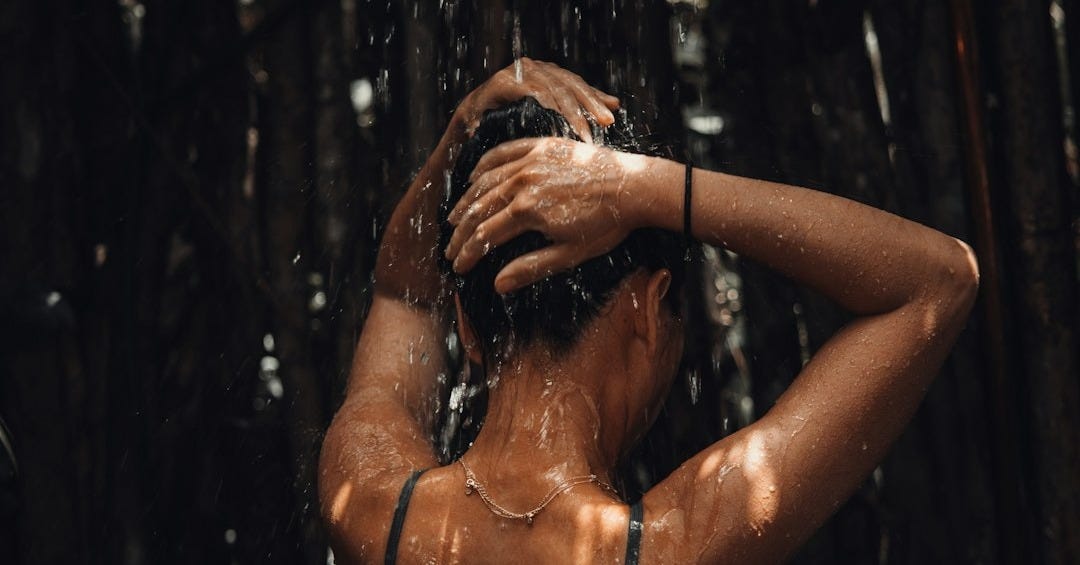
I’m back in the States and back on Substack. I’ve recently returned from living for a quarter of the year on a remote island off the coast of Norway, in an archipelago just south of the Arctic Circle. The purpose of my stay was to research a book project tentatively titled Only the Birds Know: A Love Story Between a People, a Place, and a Remarkable Duck, forthcoming from Pegasus in 2027. It was the kind of immersive reporting I’ve long dreamed of doing, and I’m still metabolizing everything I experienced during those isolated, invigorating months. What is already crystal clear to me, though, is how luxurious it feels to take an unhurried, hot shower.
And also, how wasteful.
Before I left for my reporting trip, I was in the habit of taking a shower every night—my way to wash off the day and climb into bed clean, warm, and relaxed. But on the tiny Norwegian island, there was no running water. This meant my host and I hauled buckets of rainwater from a catchment system to the house each day—through wind, snow, sleet, rain—to wash dishes or clothing or ourselves. Buckets and pots became our units of measurement. One bucket (approximately 8 quarts) could clean a day’s worth of dishes. One bucket could wash two shirts, two pairs of pants, three pairs of socks, and eight undergarments. One pot (approximately 4 quarts) was enough to shampoo and condition my hair and also bathe my entire body.
These modest volumes made me reflect on my water usage back home. I’d never thought to measure the water I use when washing dishes, clothing, or myself—or to figure out the volume I actually need for these tasks. How much had I taken for granted the modern sorcery of turning a faucet handle and, within seconds, attaining access to warm running water? Tap water’s easeful availability creates the illusion of bottomlessness, which is a problem in a country where scientists predict the United States will face substantial water shortages in the coming decades. Americans are draining groundwater at a faster rate than it can be naturally replenished. Living in a place like the Pacific Northwest, with steady rains for most of the year, it has become easy for me to ignore the water crisis we’re already in.
On the island, the process of taking a sponge bath was involved. I had to lug wood inside, start a fire in the woodstove, haul buckets from the rainwater tank to the house, heat a pot of water on the woodstove, then carry that pot up a ladder-like staircase to my room. I would then wedge myself into a plastic child-size tub, pull up Norah Jones’s Come Away With Me album, press play, and commence ladling water over myself. Cleaning my armpits presented the biggest challenge, but I soon became skilled at balancing the ladle on a shoulder with one hand while using my other hand to squeegee the soap off. When there were only a few ladlefuls left, I’d hoist the pot over myself and let the water spill onto my head, run down my neck and back. Though the moment always felt too brief, this much-anticipated grand finale was delicious. Because our rainwater supply was finite, I bathed every fourth or fifth day. This meant I savored every second of that warm water sliding down my skin.
Our food resupplies came sporadically—dependent on weather and when we could arrange for boats to make the journey from the mainland—which meant that food seemed to taste better on the island. Never in my life had oranges been so scrumptious. These juice-filled, sun-bright, utterly exotic orbs felt unfathomably precious. Peeling an orange in the Arctic Ocean became something close to holy ritual.
Because we had a limited supply of wood, propane, toilet paper, dish soap, and petrol (to run the generator to charge our small electronics), I thought about these resources differently. I felt grateful each time we had enough wood to make a fire in the woodstove, each time the kettle came to a boil on the propane stove, each time I could add a bit more juice to my phone battery.
Then, two months into living on the island, the tank of rainwater ran low. To preserve what little rainwater we had left, I began hauling buckets of seawater up from the ocean to supplement. We washed dishes with saltwater and rinsed them with rainwater. Same for clothing. The third week of June, rain poured from the sky so generously that our rainwater reserve filled once again to the brim. Still, I couldn’t bear to waste a drop, so I continued to use the same measurements for each task, even though we had more than enough rainwater to get us through our final weeks.
Now that I’m back home, it feels strange to not be able to easily measure how much water I’m using—or, more accurately, how much I’m wasting (don’t get me started on flush toilets). I’m not sure what to do with my new unease about the most easeful parts of my life. Should I install a rainwater catchment system? Build an outhouse? Take fewer showers?
What I do know is there’s some link between finiteness and pleasure. On the island, I did not take life’s little luxuries for granted. I relished simple joys—warmth, water, food—with a deliberate sort of determination. I closed my eyes when I ate oranges, savoring every bite. I gloried when warm water graced my skin—water that I had collected, heated, carried.
That’s not to say a scarcity mindset is always useful or healthy. Poverty and trauma can mutate the sense of lack into something monstrous. It is easier to use the act of rationing as a conduit for joy when one’s survival is not dependent on it.
Which is why now is the time to savor what we still have. The world is in climate crisis, but for many of us, we continue to go about our days as if we still have plenty of water, plenty of food, plenty of fuel, plenty of time.
When it comes to resource use, I wonder if adopting an island mindset is one way to not only minimize waste but also maximize reward. Rather than feeling deprived of luxuries, living on a remote island rewired my brain to experience the most basic pleasures as luxurious. I was surprised by how quickly I adapted to island life—how normal it soon felt to take an entire “shower” with the amount of water I would typically use to cook a pot of pasta.
In certain arid parts of the U.S., water meters and strategic pricing help to reduce wasteful water use. Even though Los Angeles has grown by a million people since the 1970s, its water usage has remained the same, and even dropped by 9 percent in 2023. In July 2021, Governor Gavin Newsome called for Californians to voluntarily reduce their water use by 15 percent to help alleviate the drought emergency. While residents fell short of that goal, they were still able to reduce their water use by 85 gallons per person per day.
Minimizing water waste is all about changing habits, and I’m eager to change mine now that I understand how rewarding this can feel. Confession: I’ve taken a shower every night since I stepped off the island. During an average shower length of seven minutes, I use eight times as much water in my home shower as I did on the island. If I set a timer, could I reduce the amount of time spent in the shower by a third and see whether the reward center of my brain relishes the warm water even more?
So many climate “solutions” are about finding ways around the hassle of actually changing our behavior. If we get an electric car, maybe we don’t have to reduce our driving distances. If we recycle, maybe we don’t have to rethink the way we buy packaged groceries. If we learn that Amazon is aiming for net zero carbon emissions by 2040, maybe we can still click the same-day shipping option. When so much in the world already feels hard, it’s easier to reach for Band-Aid solutions that don’t require drastic alterations to our carbon-dependent lifestyles. The convenience of modern comforts like air conditioning, single-use plastic, and online shopping makes us conflate ease with dependency. Living on a remote island reminded me that inconvenience can create room for experiencing the pleasure of my own resourcefulness and capacity for joy.
The David Suzuki Foundation has tips about reducing water and energy usage. Here are techniques I’ve incorporated (or plan to*) in my own daily life:
· Turning off the tap when brushing my teeth, shaving, or lathering.
· Washing my hands and face with cold water. Scientists have found that cold water is just as effective as warm water in reducing the spread of pathogens during hand washing (and is less irritating on skin).
· Taking shorter showers by using a timer.*
· Installing water-saving shower heads and low-flush toilets.
· Fixing leaking faucets.*
· Running full dishwasher loads.
· Using leftover water in drinking glasses to water indoor plants.
· Keeping a jug of water in the fridge so I don’t have to run the tap to get it cold.*
· Not letting the faucet run when rinsing dishes or produce. When I rinse produce, I collect the excess in a bowl and carry that bowl out to the garden to water plants.
· Installing water-efficient appliances.
· Washing only full loads of laundry or adjusting washing machine water levels or wash cycles to avoid excessive usage for smaller loads.
· Using laundry detergent that minimizes water pollution and requires less water for effective rinsing.
· Planting native species in our garden that require less water.*
· Grouping plants with similar water needs together to optimize irrigation.*
· Using mulch around plants to retain moisture and reduce evaporation.*
· Installing a drip irrigation system for our vegetable garden.
· Watering plants in the early morning or late evening to reduce loss through evaporation.
What water and/or energy-saving tips do you practice? Share them in the comments!
*Asterisk denotes my water-reduction to-do’s.
Great article. Thank you
Don't flush the toilet after every use... If it's yellow, let it mellow