

Over the Tuscan Hill
Why I refuse to age gracefully


The other day, I discovered that Diane Lane was my age, 38, when Under the Tuscan Sun was released in 2003. I would not have expected to feel so rattled by this, but I was. I’ve been watching Under the Tuscan almost annually for the last 22 years, and because it came out when I was 16, I have perceived Lane, who plays the protagonist, to be older than me ever since. As if this initial discovery wasn’t jarring enough, I scrolled a little farther down the Google results and learned that Lane played a 35-year-old divorcee in the movie. I’d always assumed the protagonist was in her forties in the film (because that’s when most people suffer a mid-life crisis, right?), and that had been a comfort. This whole time, Lane had been my bright beacon of hope: a woman who showed me how hot I could look and how much life still had to offer—even at the ripe old age of forty-something. Now that I’m “Over the Tuscan Hill,” what does this mean for my self-perception?
Such an existential dilemma feels similar to the Friends effect, a phenomenon I noticed in my early thirties, in which, no matter how much I age, I still think I look younger than the entire Season 1 cast of Friends, who were in their twenties at the time. “Do we look that old?” I texted a friend when we were in our early thirties. My question came less from a place of panic and more from sincere curiosity. If I couldn’t tell how old other people were, then maybe I was losing my sense of how old I looked, and if I didn’t know how old I looked, then how was I supposed to know how to dress, how to appear in the world, how to behave?
Culture loves to impose “age appropriateness” onto women, particularly when it comes to fashion. Young women aren’t supposed to wear certain clothes because it makes them look “too old” (read: too sexy). Older women aren’t supposed to wear certain clothes because it makes them look “too childish” (read: trying to look sexier than they can pull off). When it comes to physical appearance, women are socialized to wear makeup, to depilate, to get thin or to stay thin, and to forestall signs of aging with hair dye, Botox, eye creams, facial rollers, and that glowing mask thing that looks like a spooky Halloween costume. As for how women should behave? Let’s just say we’re not supposed to be sexual—not when we’re teenagers, not when we’re middle-aged. Certainly not when we’re elderly.
When there’s so much oppositional pressure about how to look and how to behave, how best should a woman age?
The rhetoric is that we should age “gracefully.” This means we should accept our grays, accept our wrinkles, accept our sunspots and varicose veins and menopause and rogue chin hairs that seem to sprout like Chia Pets overnight. To fight against the current of the body’s natural flow is seen by some as gauche, particularly for those who “get work done”—but only when “the work” is noticeable. When it’s not noticeable, we think women just look really good for their age. But it’s not just Over-the-Tuscan-Hill women who feel societal pressure to get work done. An increasing number of Gen-Z women are paying for “preventative” Botox and 75 percent of plastic surgeons in the U.S. have seen an influx of clients under the age of 30.
A friend recently asked me which part of my physical appearance ages me most. She volunteered her answer first. “My laugh lines,” she said, then added that she likes them. And then she told me she recently got Botox for her forehead lines. She said this as if it were a confession, like she worried I might think differently of her if I knew she’d succumbed to the urge to pursue normative beauty standards. The truth is, I don’t judge women who adjust their appearance in a culture that values feminine beauty within such narrow parameters. We all do it, whether we’re upholding those beauty standards or fighting against them.
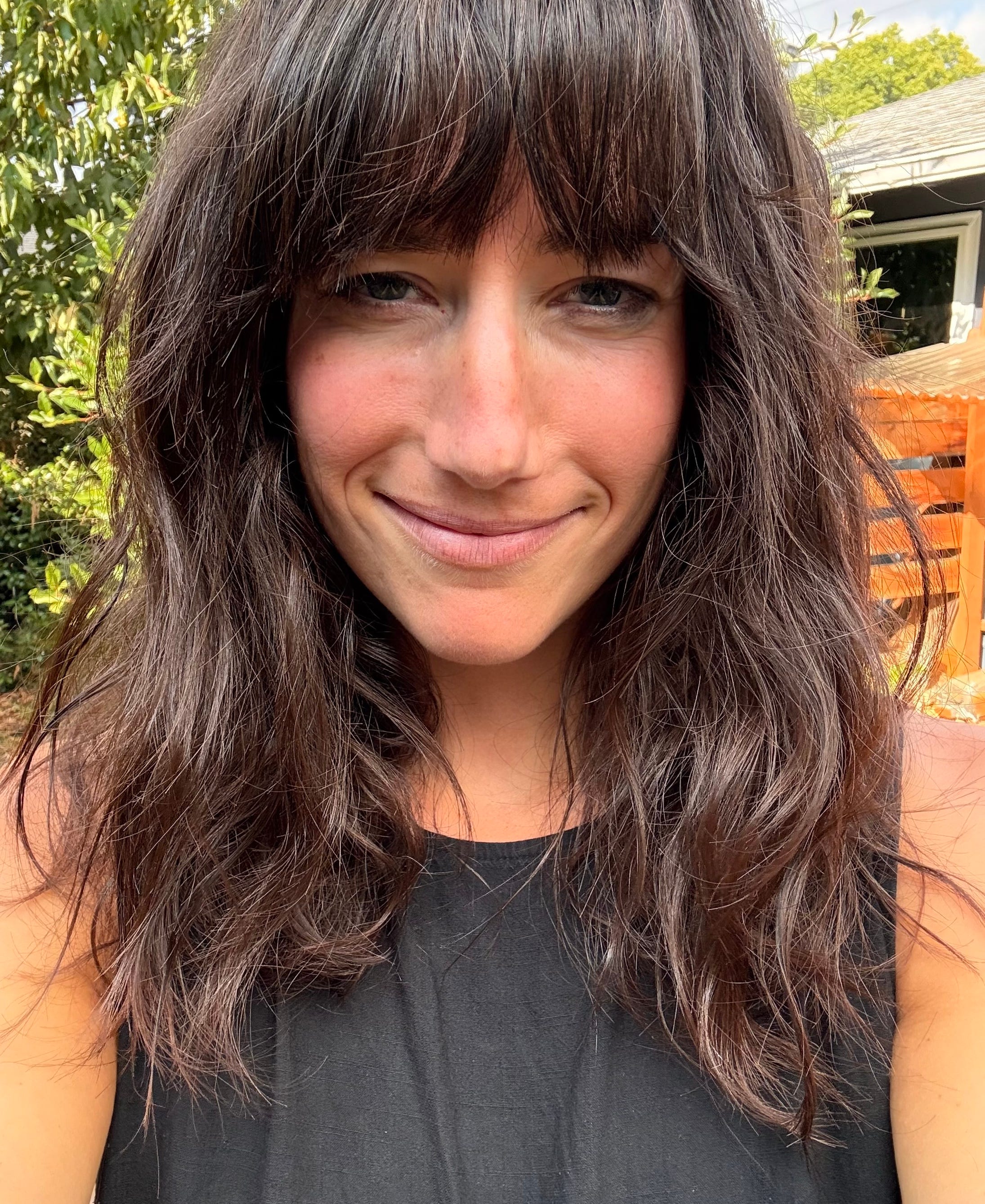
I told my friend the part of my appearance that ages me most is my gray hair, of which I have a noticeable amount now. “I’ve been thinking about dying it,” I confessed. I had been mulling this over for a few years, when the gray began to form solid streaks. An increasing number of people were commenting on my grays. “They’re so beautiful,” they said, as if they were trying to convince me. Admittedly, I paid little notice to my gray hair when I looked in the mirror. It just seemed a part of my appearance now. I didn’t mind it. I thought gray hair was striking on other women, so maybe it looked striking on me, too. It certainly didn’t seem to be hindering my ability to attract younger people in the dating world. I recently picked up a 33-year-old man on the dance floor, and when I told him I was 38 he was shocked, his surprise both flattering and unwarranted. “Thirty-eight isn’t that old,” I wanted to tell him. After he left my house, though, I recalled that scene in Under the Tuscan Sun when Lane shouts, “I still got it!” after sleeping with an Italian lover, and I felt a kinship with her character, a mix of smugness and relief to have seemingly having gotten away with something society tells us should be out of reach.
Despite my apparent age ambiguity on the dance floor, I was still considering dying my hair. I’ve never made drastic changes to my body (I live in Portland, Oregon, and I don’t even have a tattoo), so dying my hair sounded exciting, different—for me, anyhow. Adding a little color to my look felt like an opportunity, a way to lean into aging with an emphasis on fun rather than forestallment.
The only thing stopping me? My worry that people would have thoughts about it. That they would assume I was trying to defy aging, that I was tacitly endorsing a culture that values youth above maturity. I felt locked in a Catch-38. If I dyed my hair, I feared I would betray some unspoken feminist code of conduct. But if I left my grays alone simply because I was afraid of other people’s judgment, then my silvers would seem like a surrender rather than a victory.
Though Lane plays the protagonist in Under the Tuscan Sun, she was never the hero of the movie for me. That role is filled by Lindsay Duncan, who plays a 50-something bohemian ex-pat living in Italy seemingly on pure hedonistic whim. She struts across cobblestones streets in extravagant outfits, sleeps with younger men, and makes herself a muse for artists. She moves through life with the kind of joie de vivre that made me think, when I first saw the movie at age 16: that’s who I want to become.
Duncan’s character in mind, I booked a salon appointment.
In the end, no one noticed. My own mother didn’t even catch the change (and she notices everything). My hairstylist chose a tint that would blend the grays into the rest of my hair. The first few days, my locks looked more vibrant, with a slightly reddish hue, and then eventually faded until I looked like my old (or younger) self. There was a part of me that was relieved the shift hadn’t felt too drastic. There was another part of me that was disappointed I hadn’t made a bolder choice. If hair gets dyed and no one notices, does it make a sound? I decided maybe next time, I might do something louder, even more fun.
In the end, it should matter very little how we choose to look in this life. The ways a person alters their physical appearance is a personal preference, unavoidably influenced by social trends, but singular all the same. The pressure to age “gracefully” is just another form of body policing the world could do without. What matters more, at least in terms of overall life satisfaction, is aging gratefully.
What I love about Duncan’s middle-aged bohemian energy in Under the Tuscan Sun is how grateful she seems for all of life’s little marvels. The cold kiss of gelato on the tongue during a warm afternoon. The ultrasoft sensation of a duckling against her cheek. She schools Lane’s character on how to nurture one’s sense of childlike wonder—not because she wants to maintain some stranglehold on youth, but because life simply unfolds more wonderfully when we pause to appreciate it.
As we age, we might make unfortunate choices about how to alter our appearance, but regardless of the outcome, the goal should be to let ourselves be led by a sense of playfulness rather than fear.
After Lane’s character arrives in Italy, she pauses in front of a real estate listing for a rundown villa. That’s when she meets Duncan’s character, who appears behind her, gelato in hand. Duncan asks Lane if she’s going to buy the villa.
“That’d be a terrible idea,” Lane says.
“Terrible idea,” Duncan repeats cheekily. “Don’t you just love those?” Then she pivots on a heel and sashays away.