

For Whom Do We Beautify Ourselves?
My existential crisis with nail polish


Most of my life, I didn’t understand nail polish. The project seemed messy, toxic—a waste of money and time. The health risks, ranging from mycobacterial infections to contact dermatitis to traumatic onycholysis, didn’t seem worth the payoff. The paint would only chip in a matter of days and then nail polish remover would have to be bought, and more chemical fumes would be inhaled. One of my first forays into the world of nail polish came after watching the 1998 version of The Parent Trap when I was 11, when I clocked Lindsay Lohan’s cool factor in that iconic poker scene with her forest-green metallic polish. When I tried to emulate the look, though, my hands seemed like someone else’s, not mine.
In my early thirties, I went on my first date with a woman, and beforehand, decided to paint my nails a dark turquoise. In her dating profile photos, this willowy woman was Hollywood beautiful, and there was something about her refined femininity that made me want to look more feminine, too. It was a strange impulse because I had never painted my nails to increase my appeal to men. Maybe, I thought, a woman would be more discerning.
On the date, though, I couldn’t get comfortable. Whenever I glanced down at my fingers, they didn’t look feminine, only garish. They reminded me how nervous I was, how willing I was to alter my appearance to boost my desirability for a total stranger.
The next time I painted my nails was for my wedding. Again, this was something I did for outward appearances, to make my hands more photogenic, and so I paid for a professional manicure and pedicure and selected a subtle, tasteful ecru. Because my friends convinced me to spring for the gel treatment, the polish on my toes remained there, disturbingly, for a full year.
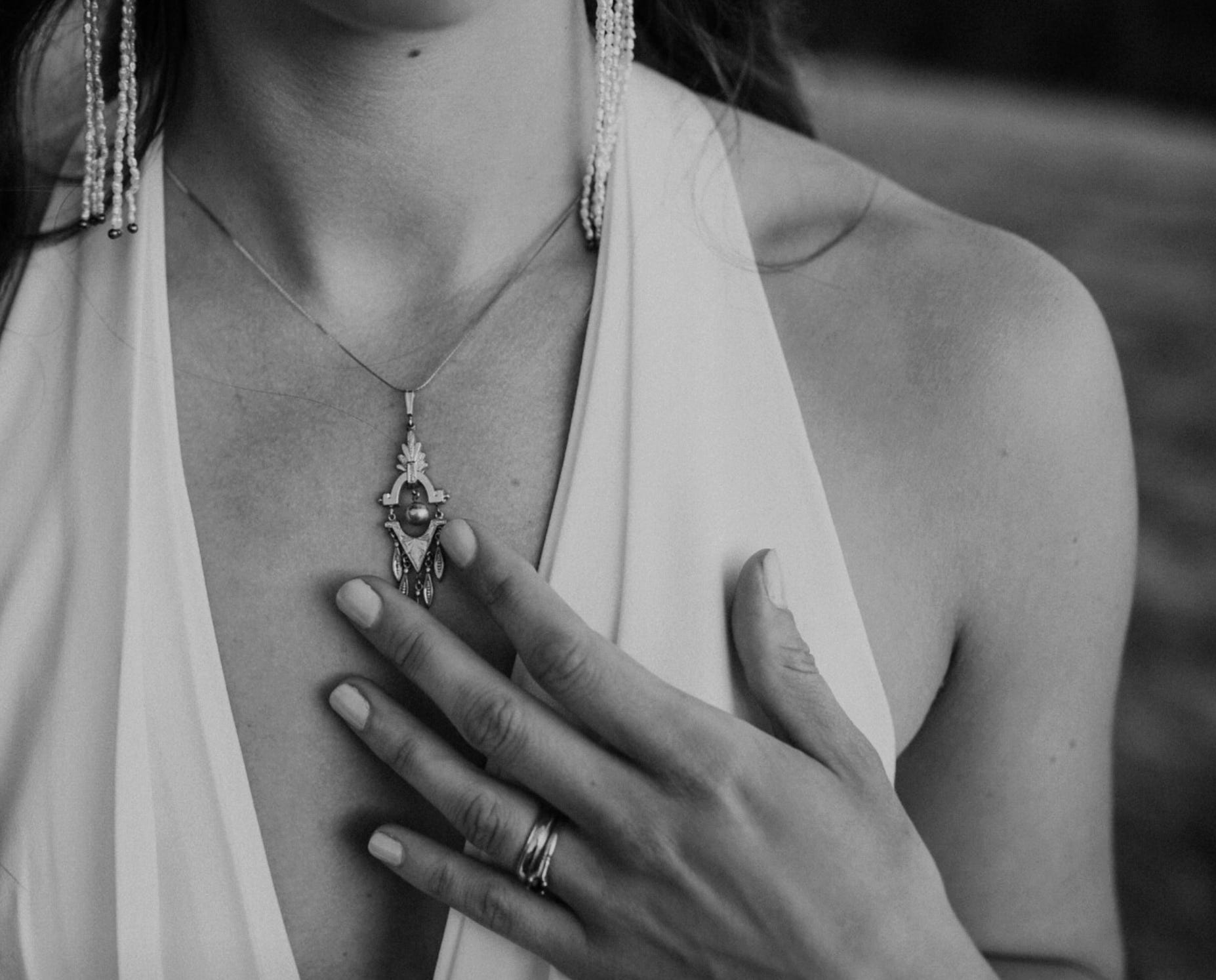
It wasn’t until three years ago, while at a summer potluck, that I noticed a friend’s nail polish and couldn’t stop staring. It was the loveliest light blue, like a particular shade of sky overlaid with gauzy clouds, or maybe a type of songbird egg. The color was somehow both calming and enlivening, and I realized I wanted to continue accessing it beyond the potluck.
In the more-than-human world, color is a tool of attraction and aversion. Scientists have found that the brighter a male goldfinch’s yellow coloring, the healthier he is, signaling to a potential mate that he’s fit to father. Bright colors can also indicate aposematism, or coloring that warns potential predators of toxicity. Some snake species have evolved to mimic the bright coloring of venomous snakes as a survival mechanism. In much of the natural world, color is used to entice or warn—an outward expression of vitality or advantageous adaptation.
Using the tools at our disposal, women have been advantageously adapting to shifting beauty standards for quite some time. And we’ve gotten skilled at deceiving those we aim to attract. I’ve been in the presence of men who can’t tell the difference between natural breasts and boob jobs, between un-penciled eyebrows and drawn-on hair, between an un-augmented butt and a rump with implants. The rigor with which we beautify ourselves has become a job unto itself, and devotion to aesthetic improvement has even enabled certain women—namely, influencers and reality TV stars—to make careers of the endeavor. In an Atlantic essay about how influencers like the Mormon wives of MomTok have skewed 21st-century femininity toward a cosmetically enhanced ideal, Sophie Gilbert writes, “The lifelong project of self-maintenance used to be, for women, a distraction from recognizing the things we really need. Now it’s the most valid and laudable form of labor.”
And that’s exactly what it is: a whole lot of work.
Lately, I’ve been asking myself: Who is it all for? The internalized programming for most women, particularly heterosexual women, wires brains to orient toward the male gaze. Clever ad campaigns sell us on the idea that men will be convinced of our vitality (and value) only if we flaunt our most made-up selves.
Throughout human history, though, attracting a mate hasn’t always been the aim of adornment. Like other animals, humans have flashed color as a means of intimidation. Circa 3500 BC, Babylonian male warriors painted their nails with powdered minerals as a scare tactic during battles. In more recent history, nail color has become a way to subvert gender-normative beauty standards. With the upward trend of male-identifying people painting their nails, we’re seeing an emergence of more male-targeted polish lines to meet the increasing demand.
Certain animals adorn themselves for reasons that aren’t entirely clear. Some scientists think orcas wear dead salmon hats to signal food availability and baleen whale species wear kelp hats possibly as part of a skin care regimen. But there’s also another theory that might explain this behavior: cetaceans just think hats are fun. They get some level of joy from donning a decoration.
After spying that lovely shade of light blue nail polish, I wanted to have a little fun. The impulse was motivated not by seeking what colors would look good on me, but rather what colors I want to look at.
I bought myself a bottle of “Surf’s Up” from Seven Seas, a company that makes a safer product, free of chemicals like Formaldehyde (it’s also vegan and cruelty free). I painted it onto my nails and cringed at my work—the brush strokes sloppy, the polish spilling onto the skin surrounding my nails. I also didn’t wait long enough to let the second layer dry, which meant I smudged and indented the enamel (at that point, I hadn’t learned about base coats or top coats). Still, I was delighted. The color was something to behold, and I reveled in the fact that I could gaze upon it as much as I liked.
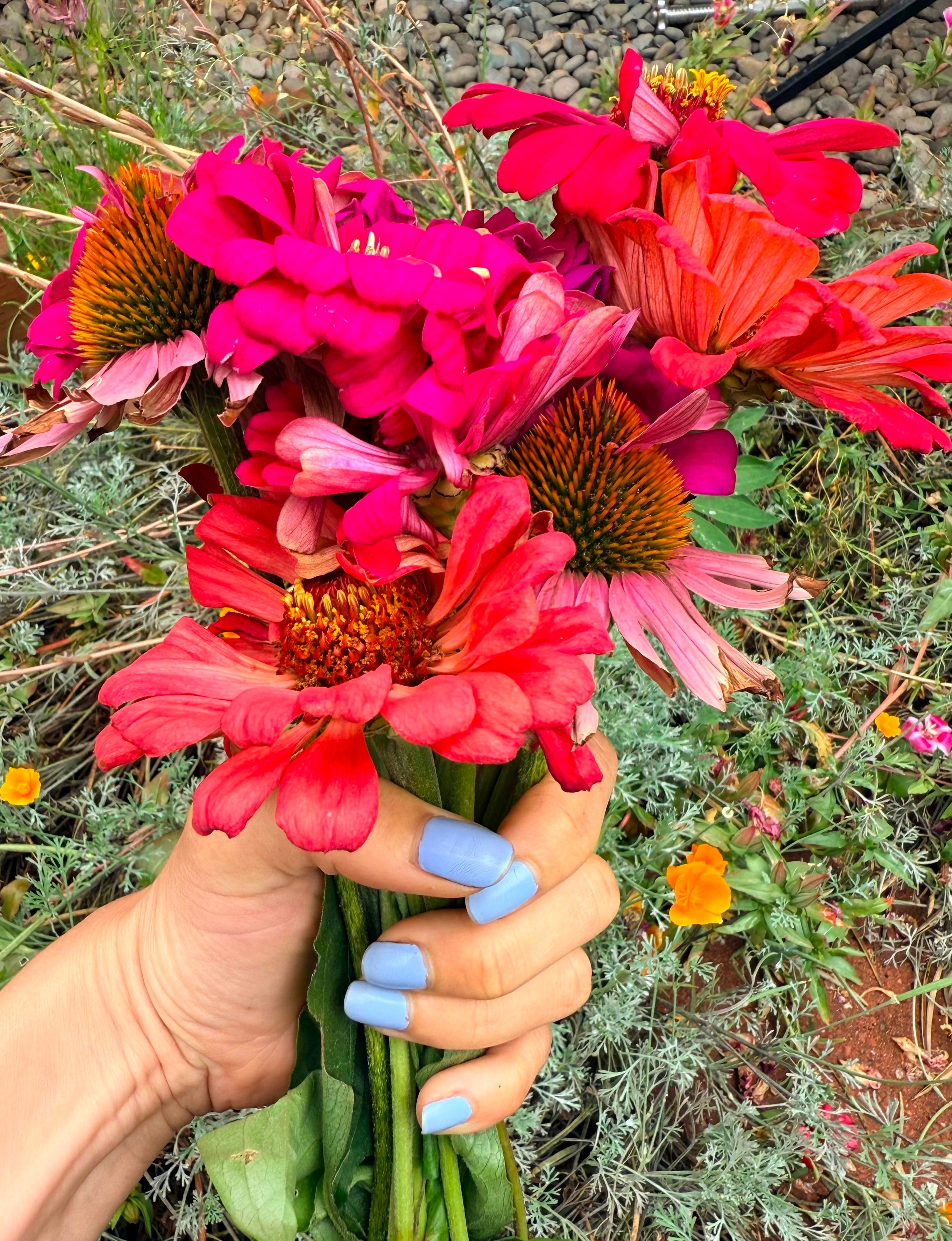
I have since purchased a half a dozen bottles of polish, and each time I add a little ornamentation to my look, I think about how nail color feels different than other kinds of beauty practices. Whereas my face is outward-facing, not accessible to me unless I seek a mirror, my fingers fall within my gaze as much as I like. In this one offshoot of the beauty industry, color feels playful rather than prescribed. It serves no greater function than to simply delight me on the daily.
Last summer, during a sunny afternoon I spent lounging on inflatables on a lake with my mom, she announced, “A dragonfly landed on my toes!”
I paddled over to her to inspect. Sure enough, a dazzling blue dragonfly had perched on her toes, her nails painted a clay pink.
My toenails were painted a starfish orange, and soon, a different blue dragonfly found its way to my feet. I have no idea whether these bugs were attracted to our toes because they were painted or simply by coincidence, but as I studied the dragonfly’s shimmering wings, the way its abdomen resembled a string of cobalt beads, beauty became, for a moment, something beyond advantageous conformation or adaptation. As sunlight settled onto us, the dragonfly’s wings flashed a reminder that part of the rush of being alive is beholding something that makes us pause and marvel.